
Olive Oil vs Desi Ghee vs Canola: Best for Pakistani Cooking?
Olive oil, desi ghee or canola? The real fat difference, which to use for tarka, paratha and frying, and a simple swap plan for Pakistani kitchens.
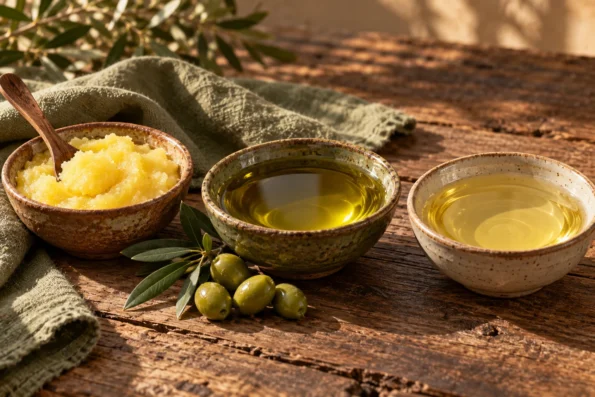
Short answer: for everyday Pakistani cooking, olive oil is the better daily fat than desi ghee, because it is mostly unsaturated fat while ghee is mostly saturated fat. Canola oil is a cheaper, neutral choice for deep frying. A practical kitchen keeps all three: olive oil for tarka, bhunai and salads, ghee for the occasional special dish, and a neutral oil for pakoras.
What is the real difference?
All three give almost the same calories, roughly 120 per tablespoon. What changes is the type of fat. Typical values per 100 g, from the USDA food composition database:
| Per 100 g (approx.) | Olive oil | Desi ghee | Canola oil |
|---|---|---|---|
| Saturated fat | 14 g | 62 g | 7 g |
| Monounsaturated fat | 73 g | 29 g | 63 g |
| Polyunsaturated fat | 11 g | 4 g | 28 g |
| Cholesterol | 0 mg | about 250 mg | 0 mg |
| Flavour | Fruity, peppery (extra virgin) | Rich, nutty, buttery | Neutral |
The World Health Organization advises keeping saturated fat below 10% of daily energy and replacing it with unsaturated fats. Swapping some of the ghee in your daily cooking for olive oil is one simple way to do that.
Olive oil vs desi ghee
Ghee gives biryani, halwa and a Sunday paratha a flavour nothing else matches, and it handles very high heat well. But it is about two-thirds saturated fat. Extra virgin olive oil is mostly monounsaturated fat and also brings natural antioxidants (polyphenols) that refining removes. For daily daal, sabzi and salan, olive oil at medium heat is the lighter choice; keep ghee for dishes where its taste is the point.
Olive oil vs canola oil
Canola is low in saturated fat, cheap and neutral, which makes it practical for deep frying pakoras and samosas. It is usually refined, so it has little flavour and few of the antioxidants found in extra virgin olive oil. Use canola where you need a lot of oil at high heat, and olive oil where you can taste it.
Can you cook desi food in olive oil?
Yes. Extra virgin olive oil starts to smoke at around 190–210 °C, above the heat most home cooking needs. Use it for tarka, bhunai, eggs and shallow frying at medium heat, and as a raw drizzle over salads, raita and hot paratha. Our guide on cooking Pakistani food with olive oil has a dish-by-dish table.
A simple swap plan
- Make your daily tarka in olive oil instead of ghee.
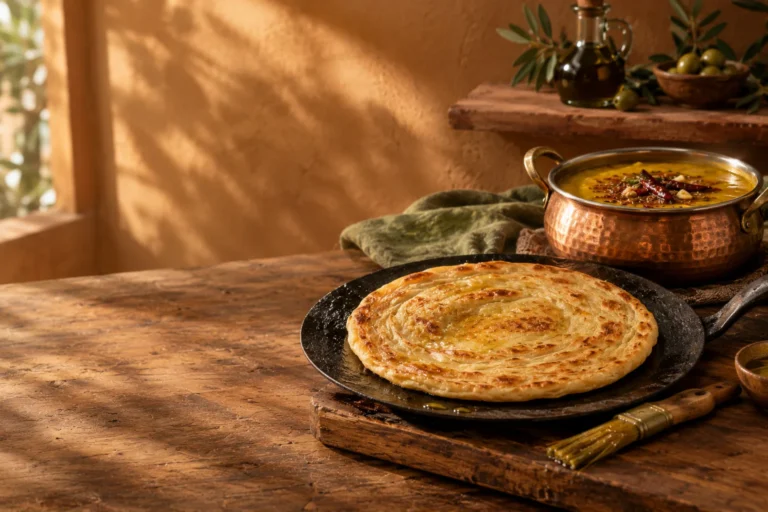
- Brush hot paratha with a little olive oil instead of ghee.
- Dress salads and raita with raw extra virgin olive oil.
- Keep ghee for festive dishes and a neutral oil for deep frying.
For everyday cooking, try Golden Legacy extra virgin olive oil from Loralai; for a bold finishing drizzle, Green Diamond wild olive oil from Zhob. See sizes and prices.
This guide is general kitchen information, not medical advice. If you follow a special diet, ask your doctor or dietitian.
Questions people ask
Is olive oil healthier than desi ghee?
For daily use, yes for most people: olive oil is mostly unsaturated fat, while ghee is about two-thirds saturated fat. Both have similar calories, so use either in moderation.
Which oil is best for daily cooking in Pakistan?
Extra virgin olive oil for tarka, bhunai, sabzi and salads at medium heat, and a neutral oil such as canola for deep frying.
Can I use olive oil instead of ghee in paratha?
Yes. Cook the paratha on the tawa as usual and brush a little olive oil on top while it is hot.